 Kinfolder
Digital Vault vs. Paper: Where to Keep Documents
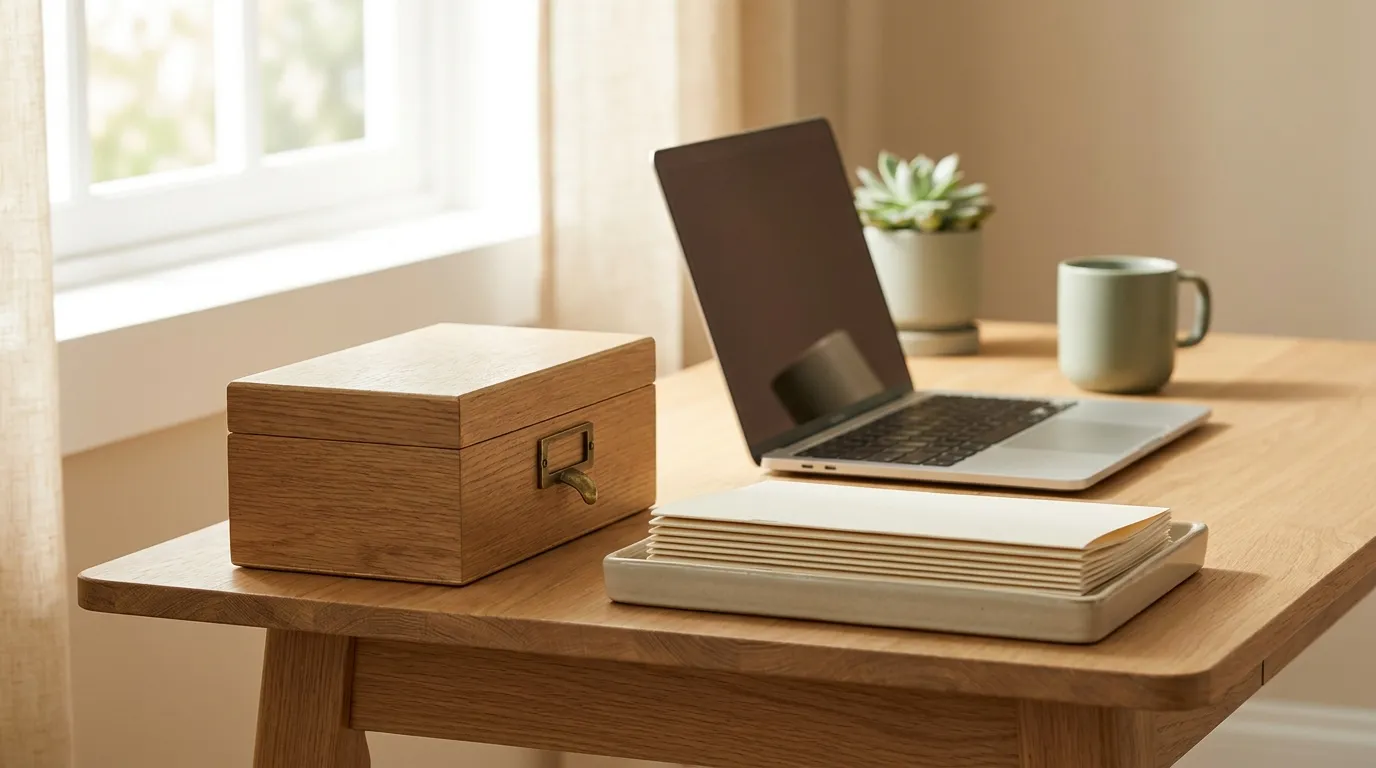
Open the drawer where your paperwork lives and you will probably find a bit of everything: a folder, a fireproof box on a shelf somewhere, a few scans on a laptop, the rest scattered across email. Most of us never really decided where to keep important documents; the pile just grew. It works well enough day to day. The trouble shows up later, when someone else needs to find a single piece of paper and has no idea it ever existed.
So let’s weigh the two main options, paper and a digital vault, and look at a practical way to get the best of both without overthinking it.
The case for paper
Paper has lasted for a reason. It needs no battery, anyone can read it, and for some documents it is still the only version that legally counts.
What paper does well
A signed will, property deeds, a marriage or birth certificate, these often need to exist as physical originals. Paper also can’t be hacked, doesn’t depend on a forgotten password, and is easy for anyone to read. A fireproof, waterproof box raises the odds that the important pieces survive a bad day at home.
Where paper struggles
Paper is fragile in quieter ways. It fades, it gets misfiled, and it only exists in one place. If the box is in a loft no one remembers, or the key is missing, or the house floods above the rating of the box, the document might as well be gone. And paper can’t be searched, finding one letter in a decade of folders means reading everything.
The biggest gap is access. A fireproof box is brilliant at keeping people out, which is exactly the problem when the person who needs to get in is your family, and you’re no longer there to point them to it.
That gap is, honestly, why I started building Kinfolder. Almost every conversation I have about it lands on the same admission: the box exists, the folder exists, and nobody else in the family knows where either of them is or what’s inside. The storage was never the weak point. The handover was.
The case for a digital vault
A digital vault is a secure, encrypted place to keep copies and records of your documents. Done well, it answers the questions paper can’t.
Durability and search
A good vault doesn’t burn, flood, or fade. Copies can be kept safely without the risk of a single point of failure, and you can find what you need in seconds rather than digging through drawers. When you decide where to keep important documents, “can I actually find this again” matters more than people expect.
Security you control
Security is what makes people hesitate about anything digital, and fairly so. The protection that matters is end-to-end encryption, which means the contents are unreadable to anyone but you and a person you choose. Look for EU hosting and access by passkey rather than a password. You can read more about how this works on our security page.
Access when it matters
This is where a digital vault quietly wins. The same encryption that keeps strangers out can be set up to let a trusted person in, but only when it genuinely matters. Instead of your family hunting for logins they were never given, the right person receives what they need, at the right time.
A sensible hybrid
You don’t have to pick a side here; the calmest approach uses each for what it’s best at.
Keep originals where they belong
Leave legally required originals on paper, ideally in a fireproof box or with the professional who holds them. Don’t try to digitise away documents that need a wet signature to count.
Hold a secure digital record
Alongside the paper, keep an encrypted digital record: scans of the important documents, plus a plain note of where the physical originals live and who to contact. That record is what turns a frantic search into a calm handover.
Avoid lock-in
Whatever you choose, make sure you can export everything at any time. Your documents should never be trapped inside one company’s app. The ability to walk away with your own data is a feature, not a footnote.
A gentle word on what this isn’t
A vault, paper or digital, organises information and copies. It does not replace a will and it does not give legal advice. Keep your formal will in place, talk to a professional where you need to, and treat your record as the map that helps someone follow your wishes, not the wishes themselves.
Where Kinfolder fits
Kinfolder is built for exactly this hybrid. It’s a calm, privacy-first app that runs in your browser and helps you organise everything your family would need in one place, accounts, passwords, documents, key contacts and wishes. It’s free to start and fill in, right in your browser. A one-time upgrade adds end-to-end encrypted safekeeping hosted in the EU, with access by passkey and release to a trusted person only when it matters. You can export anytime, so there’s no lock-in.
If you’ve been meaning to sort out where to keep important documents, you can open Kinfolder in your browser and make a quiet start today, or read more about Kinfolder first.
Frequently asked questions
Should I keep original documents on paper or digitally?
Keep legally required originals on paper, such as a signed will, property deeds and a marriage certificate. Hold a secure digital copy of everything as a back-up your family can find.
Is a fireproof box safe enough for important documents?
A fireproof box protects against fire and water, but not against being forgotten, mislaid or unreachable. Pair it with a digital record so the location and contents are written down somewhere safe.
Are digital vaults secure?
A good digital vault uses end-to-end encryption, so only you and a person you choose can read the contents. Look for EU hosting and passkey access rather than a password that can be guessed.
Can my family open a digital vault if something happens to me?
Only if you set that up in advance. Choose a tool that lets a trusted person receive access when it genuinely matters, instead of leaving everything locked behind a login only you can reach.
Does a digital vault replace a will?
No. A digital vault organises information and copies, but it is not a legal will and does not give legal advice. Keep your formal will in place and use the vault alongside it.