 Kinfolder
How to Write a Letter to Your Loved Ones
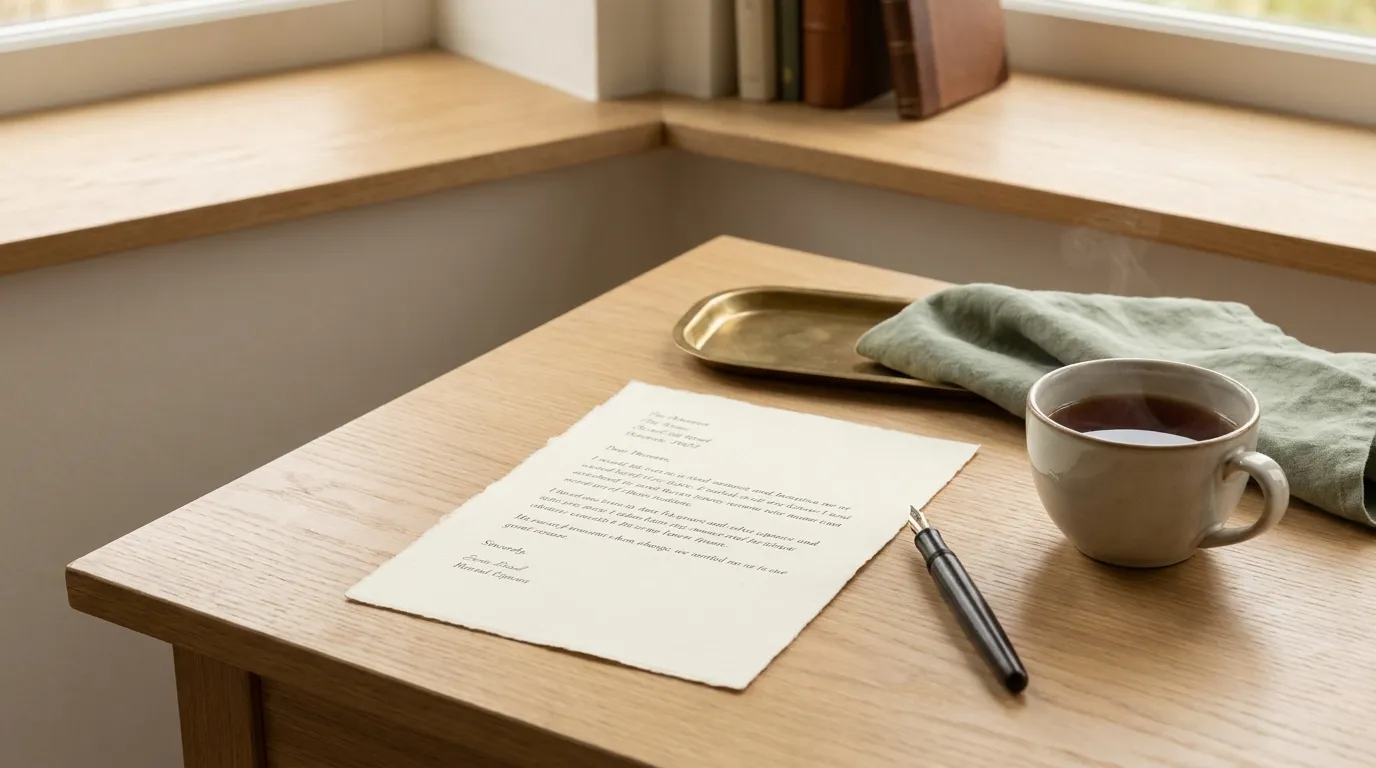
Everything else in an emergency file is logistics: accounts, policies, keys. A letter to your loved ones is the one document that is not. It is the part of you that stays in the room after the paperwork is done, and of everything in a legacy vault it is the piece families report holding onto the longest.
There is no formula for it, which is what stops most people. But a few honest guidelines help.
Say what only you can say
The letter’s job is not to be beautiful. Its job is to say the things that go without saying, because “goes without saying” is exactly what death breaks. Four directions that reliably matter:
- What they meant to you. Not in general terms; name the thing. The Sunday phone calls. The way she laughs at her own jokes before the punchline.
- A memory they might not know you kept. The specific afternoon, the specific joke. Specific is the whole game; grand sentiment fades, detail stays.
- What you are proud of in them. People carry a parent’s or partner’s spoken pride for the rest of their lives. Put it in writing.
- Permission and reassurance. “It is okay to be happy again.” “Sell the house if it helps.” Grief invents obligations; a letter can cancel them in advance.
One letter per person
A general letter to everyone reads like a speech. A short letter to one person reads like you. Three lines addressed to your daughter alone are worth more than a page addressed to the family. Start with the person you most want to reach; you can add letters over time, and many people eventually write one for each child at each stage of life.
Keep practical instructions out of it. Account numbers belong in your accounts overview and funeral preferences in your funeral wishes; a letter that turns into an admin document loses its voice.
Write it now, not then
The instinct is to wait: for the diagnosis, for old age, for the right words. But a letter written under pressure is hard to write and can be hard to read; a letter written on an ordinary Tuesday, in ordinary health, carries an ease that no deathbed note can. You are also allowed to rewrite it every year. Most people find the second version comes easier than the first.
Make sure it arrives
A letter that is never found is never read. The sealed envelope in the desk drawer mostly works, if the right person opens the right drawer at the right time, and nobody else opens it earlier.
This is why letters to loved ones are one of the eight sections in Kinfolder. Your letters stay encrypted on your own device, private for as long as you live, and are released to exactly the people you chose when the moment comes. No drawer, no “if it is found”.
Start with one letter, to one person, this week. Three honest lines are enough for a first version, and infinitely more than the unwritten perfect letter.
Frequently asked questions
What should I write in a letter to my loved ones?
The things you would want said if there were no more chances to say them: what the person meant to you, specific memories, things you are proud of in them, and any reassurance you want to leave behind. Specific beats grand.
Should I write one letter or one per person?
One letter per person, even a short one, lands far deeper than a general goodbye. Start with the person you would most want to reach and go from there.
When should I write a legacy letter?
Now, while it is easy. A letter written in ordinary good health is a calm gift; one written under pressure is much harder for everyone. You can update it whenever you like.
How do I make sure the letter actually reaches them?
Decide where it lives and who releases it. A sealed envelope with your papers works if it is found; a secure digital vault that releases to your family at the right moment removes the if.